Start with the question behind the result
Fresh produce passes through many hands before it reaches a plate. When people become ill, investigators need to understand both what those people ate and how the food moved through the supply chain. The film uses the 2026 Cyclospora outbreak to explain why that work takes several kinds of evidence.
What Cyclospora is
Cyclospora cayetanensis is a microscopic parasite that can cause an intestinal illness called cyclosporiasis. People can become infected through contaminated food or water. The film introduces the organism as a reason to take produce safety seriously, without extending the findings of one investigation to every product in a category.
A negative sample has limits
The video stresses that a negative food test does not automatically establish that all of the food represented by that sample was free of contamination. Detection can be difficult, and a sample is only one part of an investigation. The useful question is what the result shows, what it does not show, and how it fits with the other evidence.
Bring the evidence together
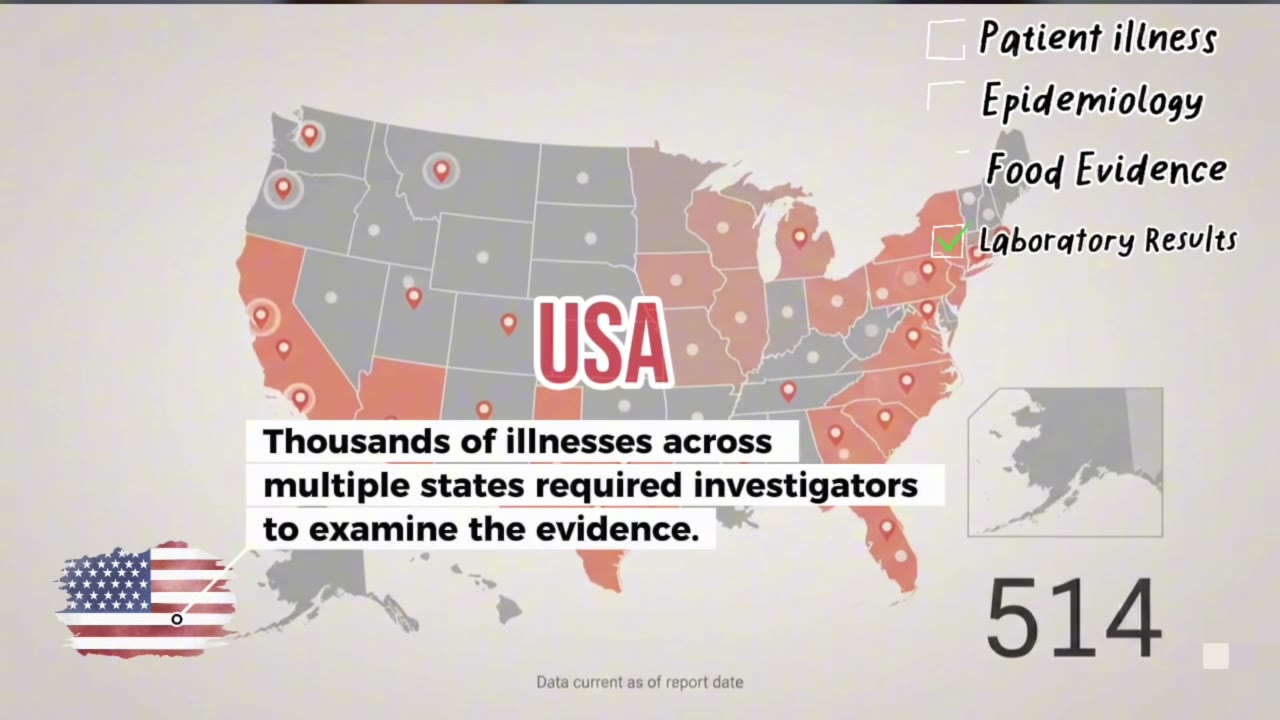
Patient interviews help identify foods people ate. Epidemiology looks for patterns in illness. Traceback follows food through its supply chain. Laboratory testing provides another line of evidence. In the film, these strands are considered together to explain why investigators associated the outbreak with iceberg lettuce, rather than relying on a single test result.
Understand the scope of a recall
A recall removes potentially affected products from circulation. As the film explains, that action is not the same as confirming contamination in every unit. It also does not justify treating every product from a company—or every bagged salad—as unsafe. Specific products, dates and official instructions matter.
Keep the timeline clear
The film was prepared on 11 September 2026. FDA’s subsequent post-outbreak summary says CDC declared the multistate outbreak linked to iceberg lettuce over on that date, while FDA’s investigation and prevention work continued. FDA also records that traceback converged on Taylor Farms de Mexico and that a voluntary recall began on 17 July 2026. These are dated findings; consult the official updates for the latest status.
Make the information usable
For food businesses, the film’s practical theme is continuous monitoring, prevention and improvement. Clear records help people ask better questions: where a sample was taken, what arrived at receiving, which specification was used, and what action followed. Digital Missionary’s tools support those operational records; they do not replace laboratory methods or public-health investigations.
Follow specific food-safety advice
Keep up with official food-safety alerts and follow the instructions for affected products. CDC advises people not to eat recalled food and notes that washing alone cannot guarantee removal of Cyclospora. Use current official guidance when deciding what action to take.